

A Korea health check-up is one of the fastest, most thorough ways to get a complete picture of your health — and an increasing number of Indian families are choosing it over screening at home or in Dubai. This guide explains what a Korean comprehensive check-up includes, how a day at Seoul National University Hospital’s screening centre actually works, how Indian passport holders can obtain a Korean medical visa with an official hospital invitation, and how CareToKorea manages the whole process for you.
By Ethan Yoon, Founder of CareToKorea · Bengaluru · Last updated September 2026
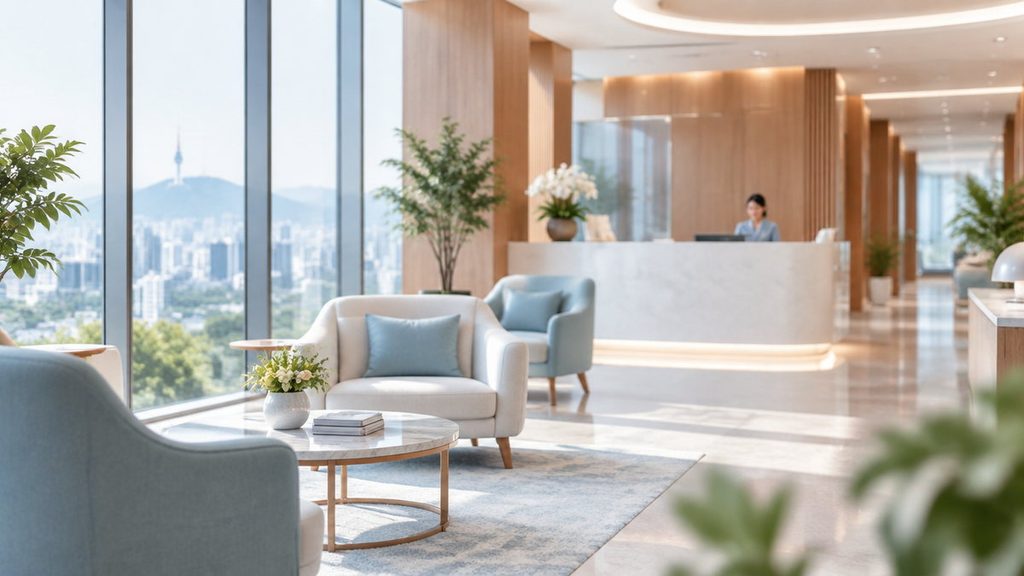
Why a Health Check-up in Korea?
Korea has quietly become one of the world’s leading destinations for preventive medicine. In 2025, more than two million international patients travelled to Korea for treatment — a record, and double the previous year. A significant share of them came for one thing: a comprehensive health screening.
Three things set the Korean approach apart.
- Everything in one day, under one roof. Blood work, imaging, endoscopy, cardiac tests and specialist review are completed in a single morning at a dedicated screening centre — not spread across departments and appointments over several weeks.
- A national culture of early detection. Korea runs one of the world’s most extensive national cancer screening programmes, and its hospitals have refined their check-up protocols on tens of millions of screenings. Gastroscopy and colonoscopy, which many countries reserve for symptomatic patients, are routine here.
- Specialists do the examining. At university-hospital screening centres, ultrasound and endoscopy are performed by attending physicians, often professors — not delegated to technicians and read later.
Many affluent Indian families already travel abroad for screening. What Korea adds is depth: the same trip that would buy a standard executive check-up elsewhere can include sedated upper and lower endoscopy, low-dose chest CT, brain MRI and a same-day consultation with the examining doctor.
How Korea Compares with Screening at Home or in Dubai
India’s leading corporate hospitals offer good executive health packages, and Dubai has become a popular option for families who want a screening trip combined with a holiday. When our clients compare, the questions that usually decide it are these:
- Who performs the endoscopy and ultrasound? In Korea it is the attending specialist, and you speak with that doctor about what they saw.
- How much imaging is included as standard? Korean premium programmes routinely include brain MRI, low-dose chest CT and, at the top tier, PET-CT — items that are often optional add-ons elsewhere.
- How long does it take? One morning in Korea, with a written report inside two weeks.
- What happens if something is found? At a university-hospital centre, diagnosis and treatment sit in the same system.
For an eight-hour flight, that combination of depth, speed and continuity is hard to match.
Our Partner: Seoul National University Hospital Gangnam Center
CareToKorea arranges health check-ups at the Seoul National University Hospital Healthcare System Gangnam Center (SNUH Gangnam Center) — the dedicated screening centre of Korea’s most prestigious teaching hospital.
Seoul National University Hospital is consistently ranked among Korea’s top institutions across every major medical field. Its Gangnam Center is purpose-built for preventive care and early diagnosis: it handles around 45,000 screenings a year, including more than 3,000 overseas patients, and all examinations are conducted by SNUH faculty. If any finding needs follow-up, you are referred directly into the Seoul National University Hospital system for treatment — no gap between diagnosis and care.
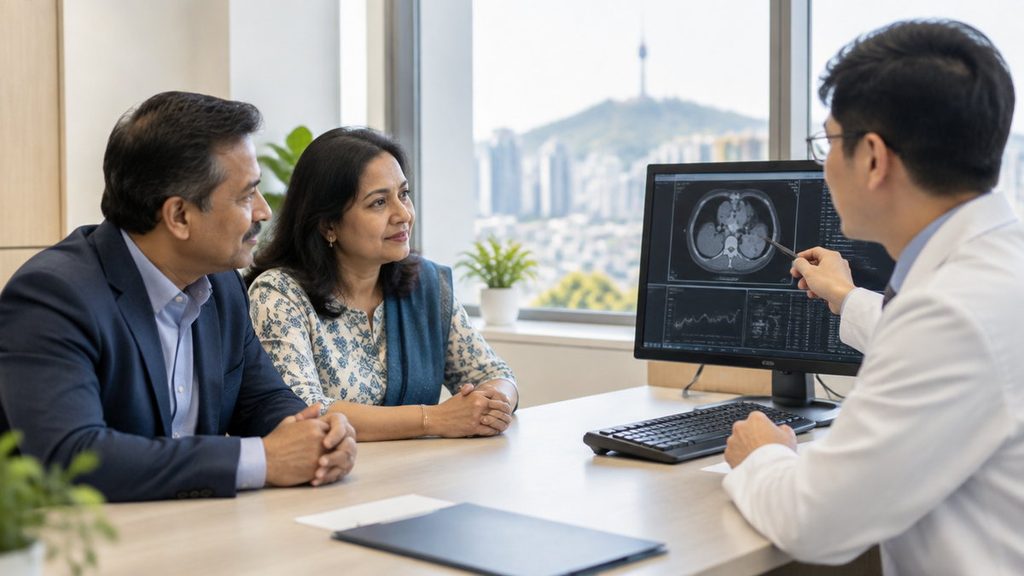
For international patients the centre provides a private one-to-one escort with language support throughout the day, English-language results, and results consultations in person or by phone after you return home.
What a Korean Comprehensive Check-up Includes
Programmes at SNUH Gangnam Center are organised in tiers. We help you choose based on your age, family history and what you want to know.
Basic Program
Designed for adults aged 20 and above as a foundation for preventing lifestyle diseases and catching problems early. Typically covers a full blood and urine panel (diabetes, lipids, liver, kidney, thyroid), chest X-ray, ECG, abdominal ultrasound, gastroscopy, vision and hearing, body composition, and a physician consultation.
Intensive Program
Everything in the Basic Program plus targeted screening for specific organs or risk areas — major cancers, brain, heart, respiratory, allergy or women’s health. This is the tier most of our clients in their 40s and 50s choose, adding items such as colonoscopy, low-dose chest CT, cardiac stress testing, carotid ultrasound and tumour markers.
Premium Program
The most extensive option, built around whole-body imaging — CT, MRI and PET — for the most accurate early detection of cancers and cerebrovascular and cardiovascular disease. Endoscopies are performed under sedation, so the entire programme is completed without discomfort.
Specialised add-on modules (heart, stroke, dementia prevention, PET cancer screening, prostate, gynaecology) can be combined with any tier. We send you the current programme brochure and a personal recommendation before you decide.
What the Day Looks Like
- The evening before: Fast from around 9 pm. If a colonoscopy is included, you follow a simple bowel-preparation routine that we explain in advance.
- Arrival (7:30–8:00 am): Your escort meets you at the centre. You change into a gown and receive a personalised examination schedule.
- Examinations (about 3–5 hours): Tests are sequenced to minimise waiting. Endoscopies are done under light sedation, typically near the end.
- Recovery and lunch: A short rest after sedation, then a meal at the centre.
- Results: Several results are discussed the same day. A full English report follows within one to two weeks, with a consultation call to walk you through every finding.
Most clients plan a four- to five-day trip: arrive, check-up the next morning, then two or three days to enjoy Seoul while the initial results come in.

What Indian Passport Holders Need to Know
Visa: yes, you can get a Korean medical visa — and we arrange the invitation
Indian citizens need a visa for Korea; K-ETA and visa-free entry do not apply to Indian passports. There are two routes, and the right one depends on your plans.
C-3-3 Medical Tourism Visa — our recommended route. Korea issues a dedicated visa for foreign patients and the family members who accompany them. The catch is that it requires an official invitation from a Korean institution registered with the Ministry of Health and Welfare to host international patients — something most travellers cannot obtain on their own, and the single most common reason medical visa applications are refused. Because CareToKorea works through a registered Korean institution, we obtain the invitation and confirmation documents for you and for a spouse or caregiver travelling with you. The medical visa allows stays of up to 90 days, so if a finding needs follow-up you can extend your treatment without leaving the country, and a multiple-entry version can be requested where ongoing care is planned.
C-3-9 short-term visitor visa. For a quick screening-only trip with no treatment planned, the standard 30-day visitor visa also covers a health check-up. We advise on which route suits your situation.
Either way, processing usually takes one to two weeks, and Korea requires an online e-Arrival Card before landing. CareToKorea prepares the full document set and walks you through the application.
Flights and timing
Direct flights from Delhi and Mumbai to Seoul Incheon take roughly eight hours; from Bengaluru, Chennai or Hyderabad, one-stop connections via Singapore, Bangkok or the Gulf are convenient. Korea is 3.5 hours ahead of India, so jet lag is minimal. Spring (April–May) and autumn (September–November) are the most pleasant seasons to visit.
What to bring
Previous test reports and imaging (with an English summary — we can arrange translation), a list of current medications, and a note of any family history of cancer, heart disease or diabetes. This lets the physician tailor the programme rather than repeat tests you have already had.

How CareToKorea Arranges Your Check-up
CareToKorea is run from Bengaluru by a Korean founder who lives in India — which means you can sit down with us in person before you commit to anything. From there:
- Consultation in India — we discuss your health priorities and recommend a programme tier.
- Booking and paperwork — we secure your date at SNUH Gangnam Center, translate records, and obtain the official invitation for your C-3-3 medical visa.
- In Seoul — airport pickup, hotel, hospital escort, and a curated itinerary for your free days. Many clients pair a check-up with a skin visit; see our Korean skin treatment guide.
- After you return — we coordinate your results consultation and, if anything needs follow-up, connect you with the right specialist at Seoul National University Hospital.
You receive a single written estimate before you travel — no hidden fees. Many clients pair a check-up with a skin visit; see our Korean skin treatment guide. Learn more about who we are.
Frequently Asked Questions
How far in advance should I book?
Four to six weeks is ideal. Premium programmes with MRI or PET and popular travel seasons fill up early.
Can my spouse or parents be screened on the same day?
Yes. We regularly arrange couples and family groups on the same morning, each with their own escort.
Are vegetarian meals available?
Yes. Tell us in advance and we arrange vegetarian or Jain-friendly meals at the centre and at your hotel.
What happens if something is found?
You are referred directly to the relevant department at Seoul National University Hospital. We help you decide whether to extend your stay for treatment or return to India with a full report for your own doctor.
Ready to Plan Your Check-up?
Tell us a little about yourself and what you would like to check. Consultations are free, confidential and without obligation.
This article is for general information only and does not constitute medical advice. Programme contents, visa rules and hospital policies change; we confirm current details for every client before booking.